Theory "Product Goal"
Information
The chapter on the project environment is not relevant for the Certified Junior Agile Project Manager (IAPM) certification exam, but it may be of interest for your professional day-to-day work.
The development compass
In the Scrum Guide 2020, the Product Goal replaced the Product Vision. In contrast to the Product Vision, the Product Goal, as the name suggests, defines a specific goal that is pursued within the Scrum project and achieved through the Sprints. Unlike what is usual in Scrum projects, the Product Goal represents a long-term objective, which - depending on the targeted product - is typically set two to six months ahead. As you already know from the previous chapter, the Product Goal is the commitment of the Scrum Team to the Product Backlog. It serves as a compass for the development of the current project. In other words, the Product Goal provides the Developers with a target to work towards while they are working on the Product Backlog.
Development of the Product Goal
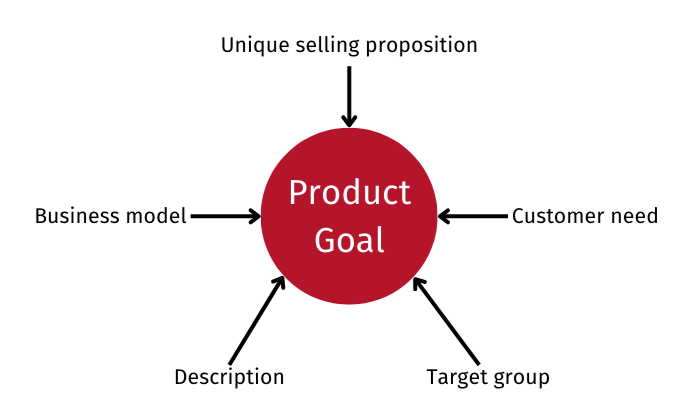
The Product Goal should represent the desired future state of the project deliverable and reflect what customers and users expect the product to be. Therefore, it is advisable to involve this target group in the development of the Product Goal. Feedback from users or (future) customers during the development of the Product Goal is important to ensure that the product meets expectations. The Product Owner develops a common understanding of the goal with the stakeholders of the project and defines the framework conditions that serve the marketing of the product and its economic success. While the Product Owner holds sole responsibility for the Product Goal, it should not be developed by them alone. Teamwork also plays an important role in defining the Product Goal. It is effective for the Product Owner to initiate the development of the Product Goal and that the Scrum Team and other stakeholders then contribute their feedback. When developing the Product Goal, you should ask yourself the following questions:
- Why is the project being carried out?
- Which audience is to be addressed?
- What is the need or benefit of the client / consumer?
- What is the project about? What exactly is being offered?
- What are the unique selling points of the application or product compared to competitors?
- How is the business model structured?
- In which way is profit to be generated?
Work towards the Product Goal
Once the Product Goal has been defined, it is the responsibility of the Product Owner to communicate it so that the Developers can work toward it. Since the Product Goal represents the commitment to the Product Backlog, only one Product Goal should be associated with each Product Backlog and a new Product Goal can only be developed once the previous one has been achieved. Furthermore, the Product Goal should not be changed during the project. However, if it is necessary to adjust the Product Goal during the course of the project, for example because it becomes obsolete, then the Product Owner, in their role as the person responsible for the Product Backlog, should decide how to proceed. Is it enough to fine-tune the Product Goal? Do fundamental adjustments need to be made? Based on the answers, the Product Owner can involve the stakeholders, make a decision independently or consult the Developers.